
What Items Cannot Movers Transport? Know Before You Move

The last box in the garage is often the one that causes trouble. It may contain old paint tins, a spare propane cylinder, a partly used fuel can or cleaning products that have been sitting there for years. Customers regularly ask, “what items cannot movers transport?” The answer protects your belongings, the moving crew, your property and everyone travelling in the vehicle.
A professional mover can handle a great deal, from household furniture and packed cartons to carefully prepared specialty items. But some belongings present a fire, health, legal or contamination risk. Others are better kept with you because they are valuable, personal or impossible to replace. Knowing the difference before moving day prevents last-minute delays and helps keep your quote and schedule on track.
Why moving companies have restricted items
Moving vehicles carry many households’ belongings in one enclosed space. A small leak, a damaged battery or a loose gas cylinder can quickly become a serious problem when it is packed beside furniture, paper cartons and soft furnishings. Insurance requirements, workplace safety rules and transport regulations also affect what a moving company can accept.
Restrictions are not there to make a move harder. They are part of reliable planning. A reputable crew should tell you clearly what cannot go on the vehicle and help you identify practical alternatives where possible. Policies can differ between companies and can change for long-distance moves, so disclose anything unusual when requesting your estimate.
What items cannot movers transport?
Hazardous materials and dangerous goods
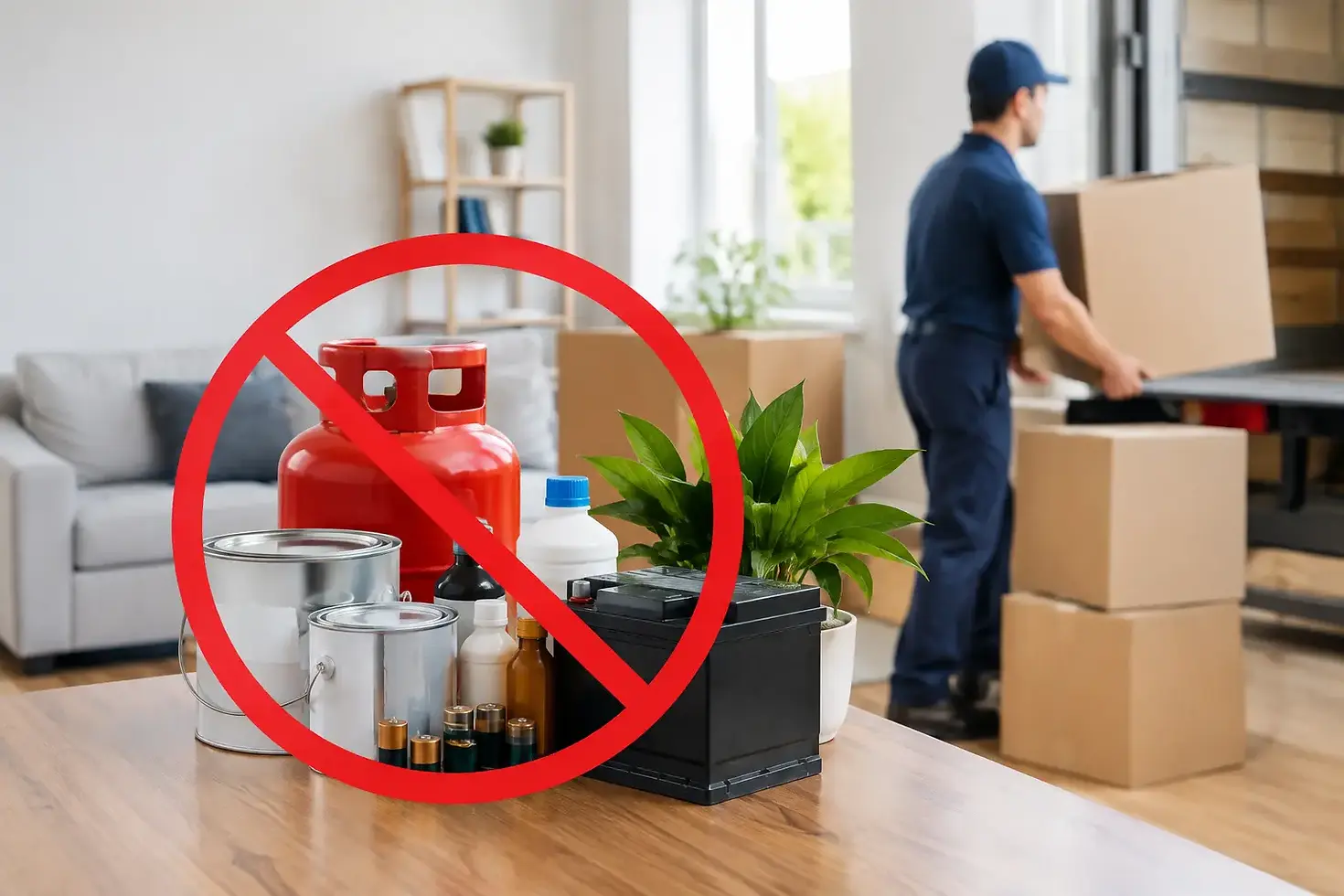
Most professional movers will not transport hazardous materials, particularly when they are leaking, open, damaged or not in their original containers. This is the category that catches people out most often because these items are common in garages, workshops, sheds and utility cupboards.
Typical restricted items include:
Petrol, diesel, kerosene, lighter fluid and other flammable fuels
Propane cylinders, butane canisters, camping gas and compressed-gas bottles
Fireworks, ammunition, explosives and flares
Paint, paint thinner, solvents, varnish, adhesives and strong chemicals
Pool chemicals, pesticides, herbicides and fertilisers
Bleach, acids, drain cleaner and other corrosive cleaning products
Damaged, swollen or loose lithium batteries, including some e-bike and power-tool batteries
Hazardous waste such as used motor oil, antifreeze and chemicals with unclear labels
Even when an item seems securely sealed, the risk can be too high for transport in a loaded moving vehicle. Temperature changes, vibration and shifting cartons can cause containers to crack or spill. Your local hazardous-waste or household chemical disposal programme is usually the right route for unwanted products. For items you intend to keep, ask the moving company in advance whether there is an approved way to prepare them or whether you should transport them yourself.
Pets, plants and living things
Pets should travel with their owners, not in a moving vehicle. They need ventilation, regular comfort breaks and familiar supervision, especially during a stressful move. Set aside a carrier, lead, food, water and any medication so your pet has what it needs from departure to arrival.
Houseplants can also be declined. They are easily damaged by heat, cold and lack of light, and soil can spill across other belongings. Some long-distance moves may have additional restrictions on plants because of agricultural rules. For a local Calgary move, it may be possible to take hardy plants in your own vehicle, protected from extreme temperatures. Delicate, oversized or pest-affected plants may need a different plan.
Essential, sentimental and high-value possessions
A mover can carefully pack and transport many valuable items, but certain belongings are safest when they stay with you. This is not a reflection on the crew. It recognises that some losses cannot be solved by an insurance claim or replacement cost.
Keep passports, driving licences, bank cards, financial paperwork, jewellery, family heirlooms, prescription medication, laptops, backup drives and keys in a personal bag. The same applies to items you need immediately after arriving, such as chargers, documents for the new property, children’s comfort items and a change of clothes.
If you own valuable artwork, antiques or collections, tell your mover before the quote is prepared. These items may be transportable with the right packing, inventory and handling plan. Do not assume that a fragile label alone provides the protection they need.
Firearms and legally controlled items
Firearms, ammunition and other legally controlled items require particular care. Rules, licensing obligations and company policies apply, and a standard household move is not the time to leave questions unanswered. In many cases, the owner should arrange compliant transport directly and keep the item secure and inaccessible throughout the journey.
Be open with your mover early in the planning process. Never pack a restricted item into an unmarked box and hope it will not be noticed. That can put the crew at risk and may stop the move once it is discovered.
Items a mover may decline for practical reasons
Not every refusal involves dangerous goods. Some items are declined because they could damage other belongings, create an unsafe lifting situation or introduce a hygiene concern into the vehicle.
Perishable food is one example. Dry, sealed pantry goods may be acceptable for a local move, but open food, frozen goods and refrigerated items are usually better used, donated or moved in a cool box you manage yourself. This is particularly true if access times are uncertain or the move will take several hours.
Movers may also decline wet, mouldy, heavily soiled or pest-infested belongings. A damp mattress, a leaking bin bag or furniture with a known bed-bug issue can contaminate a full load. Be honest about the condition of items when arranging your move. In some cases, disposal or specialist cleaning is the sensible next step.
Very heavy items are not automatically prohibited, but they need assessment. Safes, large aquariums, stone tables and commercial equipment may require extra movers, equipment, dismantling or a separate specialist service. The issue is not simply weight. Staircases, narrow turns, lift access, flooring protection and safe loading all matter.
Separate “cannot transport” from “needs preparation”
It is easy to assume that anything large or awkward is off limits. Often, it simply needs planning. Pianos, hot tubs, sheds and oversized furniture can be moved when the access, weight, condition and equipment have been assessed properly.
A hot tub, for example, normally needs to be fully drained, disconnected and cleared of loose parts before collection. A piano may require protective wrapping, a specialist dolly and additional crew members. A shed may need dismantling first. These jobs should be discussed during the quote process rather than added on moving morning.
Boots That Moves provides specialty-item hauling and removal across Calgary and surrounding communities, but clear details lead to a safer and more accurate plan. Photos, measurements, the number of steps and information about gates, parking and lifts all help determine what is needed.
How to prepare restricted items before moving day
Start sorting early, ideally as soon as you know your moving date. Begin with sheds, garages, basements and utility spaces, where restricted products tend to collect. Check labels and do not mix chemicals or pour them down drains to get rid of them. If you are uncertain what a product is, treat it as hazardous until a local disposal provider advises otherwise.
Then create three groups: items to take in your personal vehicle, items to dispose of safely, and items that need confirmation from the mover. This takes far less time than unpacking a vehicle or finding a surprise item on moving morning.
A day or two before the move, make a final sweep for the following:
Fuel in lawnmowers, snow blowers and other petrol-powered equipment
Propane cylinders connected to barbecues, patio heaters or camping gear
Aerosols, chemicals and batteries in garage cupboards and toolboxes
Important documents, medication and valuables that should travel with you
Perishable food left in the fridge, freezer or pantry
If equipment such as a lawnmower is being moved, ask how it should be prepared. Requirements vary, but fuel may need to be removed and loose components secured. Never drain fuel into a household drain or onto the ground.
Clear communication keeps the move moving
The best time to ask about restricted items is before the quote is finalised. Tell the moving company about garage contents, battery-powered equipment, specialty pieces, storage lockers and anything that may need dismantling. A transparent conversation lets the crew bring the right equipment, allocate enough time and give you clear guidance without hidden surprises.
Moving day is already full of decisions. Set aside anything that cannot travel with the movers, arrange safe disposal where needed, and keep your essentials close. That small amount of preparation gives your crew room to do what they do best: move the rest of your home carefully, efficiently and with a clear plan.


Comments