
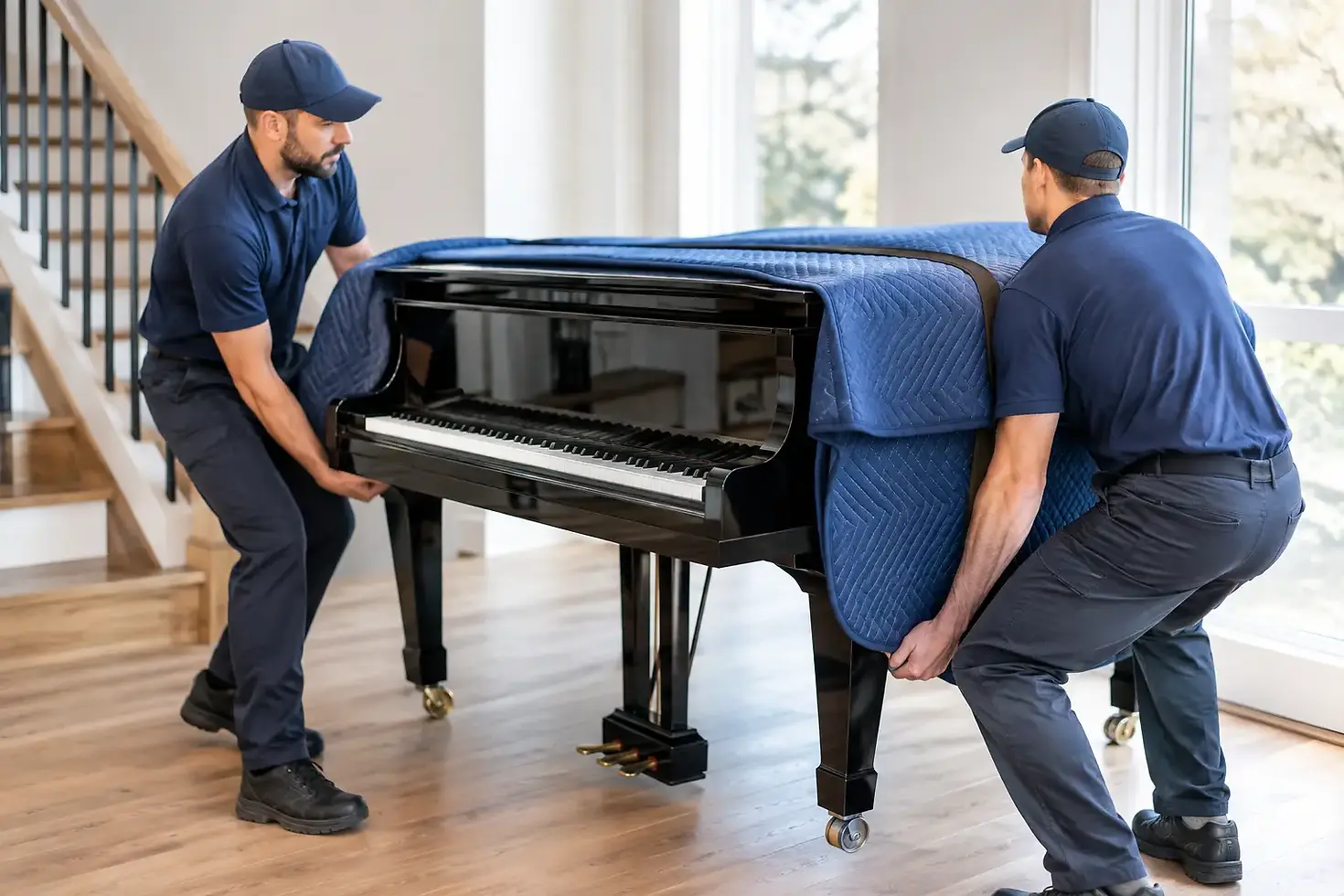
How to Move Pianos Safely in Calgary Homes

A piano can look settled and harmless in a living room, but moving one is a different job entirely. Knowing how to move pianos means accounting for concentrated weight, delicate internal parts, awkward balance and every tight corner between its current spot and the lorry. One rushed lift can damage flooring, injure a helper or turn an instrument worth protecting into an expensive repair.
For most upright and grand pianos, professional handling is the sensible choice. That does not mean you cannot prepare well. A clear plan, honest assessment of access and the right equipment will make the move safer and help you understand what a specialist piano removal involves.
Why pianos are difficult to move
A piano is not simply heavy furniture. An upright piano commonly weighs between 180 and 300 kg, while a baby grand can weigh 230 kg or more. Its weight is not evenly distributed, either. The cast-iron frame, soundboard and action make it top-heavy and difficult to control once it starts to tilt.
The outer case can also be misleading. Legs, pedals, lids and music stands are not reliable lifting points. On a grand piano, the legs are particularly vulnerable. Trying to roll, drag or lift by them can crack the frame or cause the piano to collapse unexpectedly.
There is also the home to consider. Alberta properties often present practical challenges: front steps, icy paths in winter, narrow hallways, split-level layouts, sharp turns and stairs to basements. The right approach depends on the piano type, its condition, the number of stairs and whether a clear route exists from door to vehicle.
How to move pianos: start with a route assessment
Before anyone touches the piano, measure the route. Do not rely on a quick visual check. Measure the piano’s height, width and depth, then compare those figures with every doorway, hall, stairwell and landing it must pass through. Allow room for protective padding and for the team to hold the load safely.
Check for low ceilings, handrails, light fittings, uneven paving, loose mats and door thresholds. Outside, look at the distance to the vehicle and whether the surface is level. Snow, ice, rain and loose gravel change the risk considerably, so a piano move may need to be scheduled around weather conditions or given extra protection.
Take photographs of difficult areas in advance. They help a moving team assess whether they need a stair climber, a larger crew, additional floor protection or a different loading position. Clear information also supports an accurate quote, rather than a vague estimate that changes on moving day.
Prepare the room and access route
Move small furniture, décor and loose rugs out of the way. Open doors fully and secure them where possible. Protect hardwood, tile and carpet with floor runners or boards designed for moving heavy items. Cardboard and old blankets may seem convenient, but they can slide or bunch up under weight.
The piano should be cleared of loose items before moving. Remove sheet music, ornaments and anything stored on or inside the bench. Close and lock the keyboard lid if it has a lock. If it does not, secure it gently with padded wrap so it cannot open during handling. Never tape directly onto a piano’s finish.
Use proper equipment, not improvised solutions
Piano moves need equipment matched to the job. A professional team will typically use heavy-duty moving blankets, padded straps, a piano skid board or dolly, floor protection, a loading ramp and a vehicle with proper anchor points. Grand pianos may also require a purpose-built piano board and specialist wrapping before the legs and pedal assembly are removed.
Avoid using household trolley wheels, furniture sliders, rope, bungee cords or a standard sack truck. These tools are not designed to restrain such a concentrated load. A piano can shift suddenly on a slope, and a small mistake can cause serious injury.
A piano should remain upright during transport whenever possible. Upright pianos are engineered to stand vertically, and laying one down can place stress on parts not designed to carry its weight. Some grand pianos are transported on their side only after correct dismantling, padding and securing by experienced handlers.
Lifting safely takes a coordinated team
If a move is straightforward and you have trained help, every person involved needs a clear role before lifting begins. One person should direct the movement and give instructions. Helpers should lift with their legs, keep hands clear of pinch points and move slowly in short stages. Nobody should attempt to catch a slipping piano or stand downhill from it on stairs.
The team must never lift from the lid, keys, pedals, music rack or legs. On an upright piano, lifting points are generally beneath the main body, but even this requires careful placement and enough people to share the load properly. A piano’s wheels are usually decorative or intended only for minor repositioning within a room. They are not suitable for crossing thresholds, going outdoors or travelling over a long distance.
Stairs are where do-it-yourself plans most often fail. A piano on stairs needs secure control from both above and below, sufficient strength, the right straps and a route that has been checked for turning clearance. If stairs, a steep drive, a balcony lift or a tight corner are involved, book a specialist rather than hoping extra friends will solve the problem.
Protect the piano during loading and transport
Padding is not cosmetic. Thick moving blankets protect polished wood, corners and delicate finishes from scuffs, while shrink wrap or securing straps keep the blankets in place. Wrap should be snug but not so tight that it presses hard against fragile components.
Once in the vehicle, the piano must be secured against movement from more than one direction. It should not sit beside loose furniture, boxes or tools that could shift into it during braking. The vehicle needs adequate load capacity, a stable ramp and enough space for the piano to travel without pressure against the sides or rear door.
Temperature and humidity changes can affect tuning, particularly during Calgary’s colder months. A short local trip will not usually harm a well-protected instrument, but avoid leaving it in an unheated vehicle longer than necessary. After delivery, allow the piano to adjust to the new room’s temperature before arranging a tuning. Depending on the season and the instrument, many piano technicians suggest waiting several weeks before tuning.
When professional piano movers are the safer choice
It makes sense to hire specialists when the piano is valuable, large, sentimental or difficult to access. This includes grand pianos, antique instruments, player pianos, organs, pianos moving between floors and any route involving stairs. The cost of professional removal is often lower than repairing damaged flooring, replacing a broken leg or treating a back injury.
Ask direct questions before booking. Confirm whether the mover is insured for specialist-item handling, how many movers will attend, what equipment they use and whether stairs or long carries affect pricing. Provide the piano model if known, accurate photographs, the pickup and delivery addresses, and details of each access point. Honest information prevents avoidable delays and helps the crew arrive prepared.
Boots That Moves provides specialist-item hauling for Calgary and surrounding-area customers, with clear quotes and trained crews who can assess the practical details before moving day. For a piano, that preparation matters as much as the journey itself.
A practical checklist before moving day
Before the piano is collected, make sure you have confirmed the details that most often cause problems:
Measure the piano, doors, corridors, stairwells and turns.
Clear furniture, rugs and trip hazards from the complete route.
Tell the mover about stairs, lifts, difficult parking, long carries and weather concerns.
Photograph the piano’s current condition, particularly if it is antique or has existing marks.
Plan its final position away from radiators, direct sun, damp walls and exterior doors.
Do not rush the final placement. Once the piano is in its new home, check that it sits level and stable before removing protection. Give it time to settle, then arrange tuning when the room temperature and humidity have normalised. A careful move protects more than an instrument - it preserves the music, memories and workmanship it carries with it.



Comments